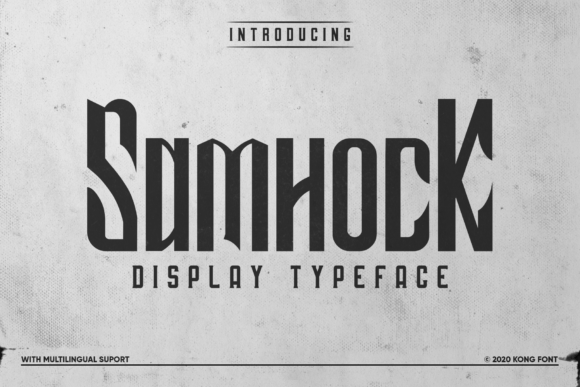
Samhock: A Modern Handwritten Font for Creative Projects
There's a particular kind of energy a handwritten font brings to a design—something a polished sans serif or a classic serif typeface simply can't replicate. It feels personal, immediate, and human. Samhock captures that energy with a contemporary twist, offering a playful yet versatile script that works across a surprising range of applications. Whether you're building a brand from scratch, designing social media content, or crafting physical goods, this font brings warmth and character that standard options often lack.
What Makes Samhock Stand Out
At first glance, Samhock reads as casual and approachable. The letterforms have a natural flow, with slightly varied baseline movement that mimics authentic handwriting without sacrificing legibility. It doesn't try too hard to look "perfect," which is precisely what gives it charm. The strokes carry just enough weight to hold up at different sizes, and the overall rhythm feels cohesive rather than chaotic.
What separates a usable handwritten font from one that ends up abandoned in your library comes down to balance. Some script fonts lean too far into decorative territory, becoming illegible at smaller sizes. Others strip away so much personality that they might as well be a basic italic. Samhock sits in a sweet spot—it retains its playful character while remaining functional for real-world design work.
Where This Font Actually Works
The versatility of a font like Samhock becomes clear when you start mapping it against common design needs. Here are some areas where it fits naturally:
- Logo design and brand identity: If you're working with a lifestyle brand, a boutique business, or a creative service, Samhock can serve as the primary logotype or as a secondary script element. It pairs well with clean sans serif fonts for brand names that need both personality and professionalism.
- Packaging design: Product labels, box designs, and wrapping elements benefit from handwritten touches. Think artisan food brands, handmade cosmetics, or specialty coffee packaging—Samhock adds that crafted feel consumers associate with quality and authenticity.
- Social media graphics: Instagram stories, quote cards, promotional posts, and highlight covers all benefit from fonts that feel personal. A handwritten display font like this breaks through the visual noise of overly templated content.
- Invitations and event materials: Wedding invitations, party flyers, workshop announcements, and save-the-dates rely on typography that sets an emotional tone. Samhock handles this with ease.
- Website headers and blog graphics: Used sparingly for headlines or accent text, this typeface can inject personality into otherwise minimal web layouts without compromising readability.
- Merchandise and print products: Tote bags, mugs, stickers, greeting cards, and posters—physical products with text often call for a creative font that feels handcrafted rather than corporate.
- Digital products and marketing assets: E-book covers, lead magnet designs, email headers, and course graphics all benefit from typography that feels engaging and human.
Pairing Samhock With Other Typefaces
One of the most practical skills in design is knowing how to combine fonts. A handwritten script like Samhock works best when it's not carrying the entire typographic load. It's a display font at heart—meaning it shines in headlines, titles, and accent moments rather than in body copy.
A reliable approach is to pair it with a clean sans serif for longer text. Something like a geometric or humanist sans serif creates a pleasing contrast: the structured, neutral letterforms step back while Samhock steps forward. If your project leans more editorial or traditional, a light serif font can also work alongside it, especially in layouts where you want to mix elegance with approachability.
Test your pairings at actual sizes. A combination that looks balanced on a large monitor might feel cluttered on a phone screen or a printed card. Set a headline in Samhock, place a paragraph of body text below it, and evaluate the visual hierarchy. Does the headline pull attention without overwhelming the content beneath it? Does the body text feel comfortable to read? These are the questions that separate polished design from guesswork.
Readability and Practical Considerations
Any handwritten font demands a degree of caution when it comes to readability. Samhock holds up better than many script fonts at moderate sizes, but there are still sensible limits. Avoid setting entire paragraphs in any script typeface—reserve it for short bursts of text where personality matters more than scanning speed.
Consider the context where your audience will encounter the text. A social media graphic viewed for two seconds needs to be instantly legible. A product label read from arm's length requires clarity at small sizes. A website header has more breathing room but still needs to load quickly and render consistently across browsers and devices.
Color contrast matters too. A handwritten font in a light weight placed over a busy background photo will disappear. Give Samhock room to breathe with adequate contrast, padding, and spacing. If you're using it in Silhouette Design Studio for cutting projects, test a simple word first to see how the letterforms behave with your chosen material.
Licensing and Commercial Use
Before using any font in a commercial project, verify the licensing terms. Most premium fonts come with a license that covers specific use cases—personal projects, commercial work, or both. Some licenses restrict embedding in digital products or limit the number of users on a team. If you're designing for a client, make sure the license covers their intended use as well.
Samhock's compatibility with tools like Photoshop and Silhouette Design Studio makes it accessible for a wide range of creators, but the license is what determines how far you can legally take it. Read the details before you commit to using it in a product you plan to sell or distribute.
Building Visual Consistency Across Projects
One of the quieter benefits of choosing a versatile creative font is the consistency it brings to your visual identity. When the same typeface appears across your website, your packaging, your social content, and your printed materials, it creates a thread that ties everything together. Customers start to recognize that visual language before they even read the words.
Samhock works particularly well for creators who want their brand to feel approachable without being sloppy. It signals creativity and personality while still looking intentional. That's a difficult balance to strike, and it's worth investing time in getting it right. Use it consistently across your touchpoints, pair it thoughtfully with complementary fonts, and it becomes a recognizable part of your brand's visual identity.
The best design choices aren't always the boldest ones. Sometimes they're the quiet, consistent details that make someone stop scrolling, pick up a product, or click a link. A well-chosen font like Samhock can be one of those details—something that doesn't shout for attention but earns it anyway through genuine character and thoughtful application.