Sabas Renate: A Handwritten Font with Endless Creative Potential
There's something undeniably magnetic about a font that feels personal. Sabas Renate captures that elusive quality—the warmth of a handwritten note, the elegance of a carefully crafted letter, the kind of visual charm that makes people pause and pay attention. This premium script font strikes a rare balance between playful and sophisticated, making it a versatile addition to any designer's toolkit or small business owner's brand library.
Whether you're designing wedding invitations, crafting social media content, building a brand identity from scratch, or simply looking for a typeface that brings genuine personality to your projects, Sabas Renate offers a refreshing alternative to the overused fonts flooding the market. Its flowing letterforms and natural rhythm give designs an organic, handcrafted feel that resonates with audiences craving authenticity in an increasingly polished digital landscape.
What Makes This Handwritten Font Stand Out
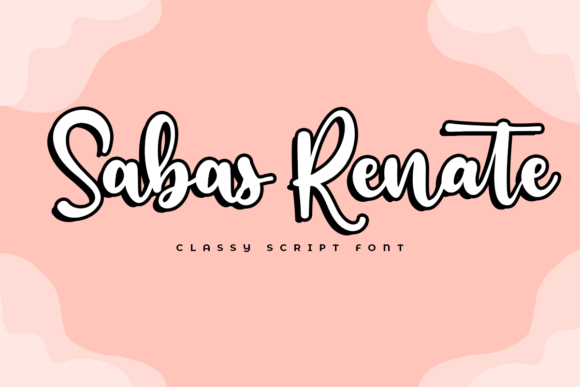
Sabas Renate isn't just another script font trying to mimic handwriting. Its letterforms carry a distinctive character—graceful without being fussy, expressive without sacrificing legibility. The strokes flow with a natural variation that feels genuinely hand-drawn, complete with subtle imperfections that give it life and warmth. This isn't a font that looks like it was generated by an algorithm; it looks like someone sat down with a quality pen and let their creativity guide the motion.
The font's versatility is one of its strongest assets. It works beautifully at larger display sizes for headlines and logos, yet remains surprisingly readable when used thoughtfully in smaller applications. The character set includes a comprehensive range of glyphs and ligatures, and because it's PUA encoded, accessing those special characters is straightforward in virtually any design software. No special OpenType features required—just type and design.
From a visual standpoint, Sabas Renate sits in that sweet spot between modern and timeless. It doesn't lean so heavily into trendy aesthetics that it'll feel dated in two years, but it also doesn't feel stuffy or outdated. This makes it a smart choice for projects where longevity matters, like brand identity systems, editorial layouts, and packaging design.
Practical Applications Across Design Disciplines
The beauty of a well-crafted handwritten font lies in its adaptability. Sabas Renate proves this across a surprisingly wide range of creative applications, each benefiting from its unique personality and charm.
Branding and Logo Design: For businesses that want to communicate warmth, approachability, and authenticity, a script font like Sabas Renate can become the cornerstone of a visual identity. Think artisan bakeries, boutique hotels, handmade jewelry brands, photography studios, or wellness coaches. The font instantly communicates that there's a real person behind the brand, not just a corporate machine. Used as a primary logotype or as a complementary accent alongside a clean sans serif font, it creates visual hierarchy and emotional resonance.
Wedding Invitations and Stationery: This is perhaps the most natural home for a font like Sabas Renate. Its elegant flow and romantic undertones make it ideal for save-the-dates, invitations, RSVP cards, menu cards, place settings, and thank-you notes. The included ligatures and alternate characters allow for customization that prevents the generic look many couples try to avoid.
Social Media Graphics: In a feed full of bold sans serifs and rigid layouts, a handwritten font cuts through the noise. Sabas Renate works wonderfully for Instagram quote graphics, Pinterest pins, Facebook cover images, and story overlays. It adds a personal touch that encourages engagement—people respond to content that feels human rather than manufactured. Pair it with a simple geometric sans serif for body text, and you've got a visual system that's both eye-catching and easy to read.
Packaging and Product Design: Small-batch products, subscription boxes, cosmetics, candles, artisan foods—any physical product benefits from packaging that tells a story. Sabas Renate brings that storybook quality to labels, boxes, hang tags, and wrapping materials. It communicates craft, care, and attention to detail before the customer even opens the package.
Website and Blog Design: While you wouldn't set an entire blog post in a script font, Sabas Renate serves beautifully as an accent typeface on websites. Use it for hero section headlines, pull quotes, section dividers, call-to-action buttons, or decorative elements. It adds visual interest and breaks up the monotony of body text set in a standard serif or sans serif font.
Print Materials and Posters: Event posters, flyers, brochures, business cards, and menu designs all benefit from the personality a handwritten font brings. Sabas Renate catches the eye without overwhelming the layout, especially when used strategically for key words or phrases rather than lengthy passages of text.
Merchandise and Digital Products: Tote bags, mugs, t-shirts, digital planners, printable wall art, e-book covers—the applications extend far beyond traditional design. Creators selling on platforms like Etsy, Creative Market, or Shopify can use this font to develop cohesive product lines that look professionally designed.
Pairing Sabas Renate with Other Typefaces
No font exists in isolation, and the ability to pair Sabas Renate with complementary typefaces dramatically expands its usefulness. The key is contrast without conflict.
A clean, geometric sans serif font creates a beautiful counterbalance. Think of fonts like Montserrat, Poppins, or Raleway alongside Sabas Renate—the modern simplicity of the sans serif grounds the organic energy of the script, creating a layout that feels both polished and personal. This pairing works exceptionally well for brand identity systems, where the script font handles display elements and the sans serif manages body copy and secondary information.
For a more traditional or editorial feel, pairing with a classic serif font like Playfair Display, Lora, or Cormorant Garamond creates an elegant, layered typographic hierarchy. This combination suits wedding stationery, luxury branding, magazine layouts, and upscale packaging.
The golden rule of font pairing applies here: limit yourself to two or three typefaces in any single project. Let Sabas Renate shine as the personality-driven headline font while your supporting typeface handles the heavy lifting of longer text passages. This approach maintains visual consistency and prevents the design from feeling chaotic or unfocused.
Readability Considerations and Best Practices
Every creative font comes with practical considerations, and Sabas Renate is no exception. While it's more legible than many script fonts, thoughtful implementation makes all the difference.
Size matters. Use this font at larger sizes for headlines, titles, and short phrases where its character can be fully appreciated. For body text or any passage longer than a sentence, switch to a highly readable serif or sans serif font. This isn't a limitation—it's simply how script fonts are designed to function best.
Contrast is your friend. Ensure sufficient contrast between the font color and background. Handwritten fonts with their varied stroke widths can lose definition on busy backgrounds or when color contrast is too low. Dark text on light backgrounds or crisp white text on solid, darker backgrounds typically yields the best results.
Spacing and line height need attention. Script fonts often benefit from slightly increased letter spacing and generous line height compared to what you might use with a sans serif font. Give the letterforms room to breathe, and the overall design will feel more refined and readable.
Test across contexts. Before committing to a font for a brand or major project, test it at multiple sizes, on different backgrounds, in both digital and print contexts if applicable. What looks stunning on your monitor at 72 dpi might feel different printed at 300 dpi, and vice versa.
Making the Most of Your Font Investment
When you choose a premium font like Sabas Renate, you're investing in a design asset that can serve you across dozens of projects. To maximize that value, take time to explore the full character set. Many designers download a font, use the basic alphabet, and never discover the ligatures, alternate characters, and special glyphs that can elevate their work from good to exceptional.
Since this font is PUA encoded, those extra characters are accessible without needing advanced typographic software knowledge. In most design applications, you can access them through the glyphs panel or character map. Experiment with different letter combinations to find variations that feel right for each specific project.
Also consider the licensing terms for your intended use. If you're designing for commercial clients, selling products that feature the font, or using it in client work, make sure your license covers those applications. Understanding commercial font licensing upfront prevents headaches down the road and ensures you're using the font legally and ethically.
Sabas Renate represents the kind of design asset that earns its place in your library through repeated, versatile use. It's the font you reach for when a project needs that human touch—when sterile perfection isn't the goal, but genuine connection is. From a single wedding invitation to a complete brand identity, its charming, adaptable character makes it a worthy companion for anyone who values thoughtful, authentic design.