Elatina: A Handwritten Font That Balances Elegance and Versatility
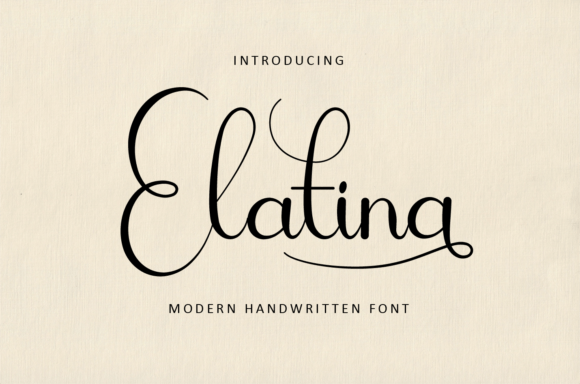
There's a moment in every creative project when you realize the typography needs to do more than just sit there. It needs to breathe. It needs to feel intentional. You've probably experienced this—scrolling through font libraries for hours, finding options that are either too stiff, too playful, or too generic to match the vision in your head. Elatina enters that space with a quiet confidence. This handwritten font carries a distinct personality: delicate enough to feel personal, yet balanced enough to work across professional contexts without looking amateurish. The letterforms have a natural flow, with subtle variations that mimic real handwriting without sacrificing legibility. If you've been searching for a typeface that bridges the gap between warmth and sophistication, this one deserves a closer look.
What Makes Elatina Stand Out in a Crowded Font Market
Handwritten fonts are everywhere. Some look like they were scrawled in a hurry. Others try so hard to look "authentic" that they become unreadable at small sizes. Elatina avoids both extremes. The letters are well-proportioned, with consistent spacing that prevents the chaotic look many script fonts suffer from. Each character connects smoothly to the next, creating a rhythm that guides the eye naturally across a line of text. The baseline stays steady, which matters more than most people realize—wobbly baselines make even beautiful fonts look sloppy in professional applications.
What really sets this premium font apart is its versatility. You could use it for a wedding invitation and it would feel romantic. Drop it onto a coffee bag label and it communicates artisanal quality. Place it on a social media quote graphic and it adds emotional resonance without trying too hard. That range is rare. Most handwritten typeforces you into a narrow aesthetic lane. Elatina gives you room to maneuver.
Practical Applications Across Design and Branding
Let's talk about where this font actually works in real projects, because theory only gets you so far.
Logo design and brand identity are natural fits. A boutique bakery, a personal coaching business, a lifestyle blog, a handmade jewelry line—these brands often need typography that feels human and approachable. Elatina delivers that warmth while maintaining the visual consistency a brand identity demands. When you pair it with a clean sans serif font for body text, you get a professional hierarchy that looks polished without feeling corporate.
Packaging design is another strong application. Think about products on a shelf competing for attention. A handwritten font like Elatina on a label immediately signals craftsmanship and care. It works especially well for organic food brands, skincare products, artisan candles, or specialty teas—any product where the story behind the brand matters as much as the product itself.
For social media graphics, this creative font shines in quote posts, story templates, and promotional announcements. Instagram and Pinterest audiences respond to visuals that feel curated but not overly produced. Elatina gives your graphics that handcrafted aesthetic without looking like you designed them in five minutes. It's the kind of detail that builds recognition over time—followers start associating that typographic style with your content before they even read the words.
Web design and blogs benefit from selective use. A handwritten font like Elatina works beautifully for section headers, pull quotes, or featured post titles on a blog. It draws attention where you want it and adds personality to an otherwise text-heavy page. The key here is restraint. Use it sparingly as an accent font rather than for paragraphs of body copy, and you'll maintain readability while injecting visual interest.
Print materials and editorial layouts also benefit from this typeface. Magazine feature headers, restaurant menus, event programs, lookbook titles—these are spaces where Elatina's elegant script elevates the overall design. It pairs particularly well with serif fonts for editorial work, creating a classic-meets-contemporary contrast that feels sophisticated.
Don't overlook invitations and stationery. Wedding invitations, party announcements, thank-you cards, and greeting cards are practically made for fonts like this. The flowing letterforms carry an inherent celebratory quality that suits occasions meant to feel special.
Choosing the Right Context and Pairings
Not every project needs a handwritten font, and knowing when to use one is just as important as knowing which one to choose. Elatina works best when your project calls for a personal, approachable, or elegant tone. If you're designing for a law firm or a financial institution, this probably isn't your primary typeface. But for creative industries, lifestyle brands, events, and personal projects, it's a strong contender.
Font pairing deserves attention. A script font like Elatina needs breathing room, which means surrounding it with simpler typography. A geometric sans serif creates a modern contrast. A classic serif font like Garamond or Lora builds an elegant, timeless combination. Avoid pairing it with other decorative or ornate fonts—you'll end up with visual noise rather than a cohesive design. Test your pairings at different sizes and on different backgrounds before committing. What looks gorgeous in a mockup on your laptop might lose its charm at 12 points on a business card.
Readability is always a consideration with any display font or script typeface. Elatina performs better than many handwritten fonts at smaller sizes, but you still need to be thoughtful. Use it for headlines, titles, and short phrases rather than lengthy paragraphs. Increase letter spacing slightly if you're using it at smaller sizes, and make sure there's enough contrast between the text and its background.
Getting the Most from This Design Asset
Before you download and start designing, take a moment to review what's included with the font. Many premium fonts come with multiple styles—alternates, ligatures, swashes—that can dramatically change the look of your typography. Exploring these options before you start a project saves time and helps you unlock the full potential of the typeface. Experiment with different letter combinations to see how the connections flow and whether alternate characters better suit your specific layout.
Licensing matters, especially if you're using the font for commercial work. Make sure the license covers your intended use, whether that's client projects, merchandise, digital products, or print-on-demand items. Most premium font licenses are straightforward, but it's worth confirming before you build an entire brand identity around a typeface you might need to replace later.
Think about your broader design system when incorporating Elatina. A single beautiful font doesn't make a design—it's how that font works alongside your color palette, imagery, spacing, and overall visual language that creates impact. Use it as one piece of a larger puzzle. When everything aligns, the result is a brand or project that feels cohesive, intentional, and memorable. That's the real value of choosing typography with care. It's not just about aesthetics. It's about communication, recognition, and the feeling someone gets when they encounter your work for the first time.